
Walk
In nature. In meditation.

Two thoughts have been rolling around in my head for days now.
Solace
Skillful action
Those two things seem to be what many of us are needing/wanting/working on right now. You too, perhaps?
In these rocky times, we yearn for the softness of solace. And we’re puzzling over how to handle these rocky times—what forms of response are right for us, personally and collectively.
As I’ve let those two things ferment in the pickling jar of my brain, one answer keeps coming up:

Walk. Walk in nature. Walk in meditation.

Three days of walking
Thich Nhat Hanh was a Vietnamese Zen master and internationally known peace activist. I imagine you’ve heard of him. In 1967 his friend, Martin Luther King Jr., nominated him for the Nobel Peace Prize, calling him “an apostle of peace and nonviolence.” At meditation retreats all over the world, “Thay” was known for leading throngs of people on silent mindful walks, clad in his long brown robe. He knew the calming, clarifying power of walking meditation.
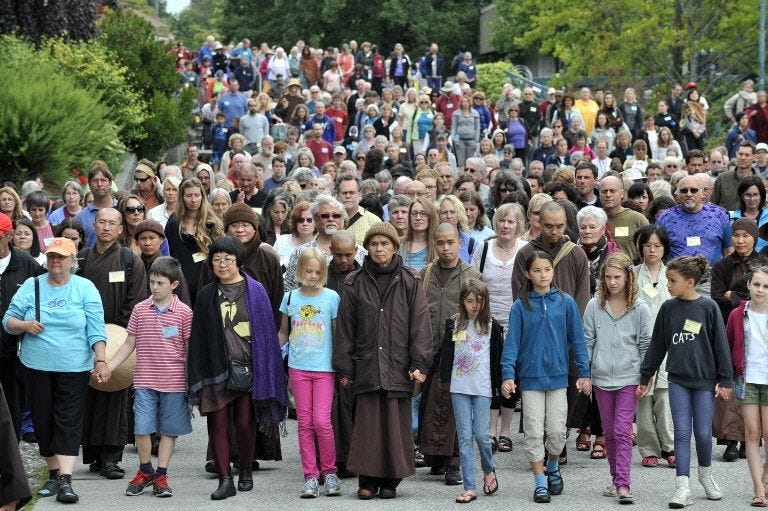
In 2003, when the U.S. invaded Iraq, Thich Nhat Hanh reportedly was so disturbed that he spent three days practicing walking meditation, alone, until he finally felt his mind and heart quieting down. Until he knew his response would come from a place of wisdom and not reactivity.
Historic walks
Over millennia, in cultures and spiritual traditions around the world, people have worked on their problems by walking.
Some walks are epic. They change history.
In 1930, Mahatma Gandhi led a massive 24-day walk called the Salt March. Gandhi and 60,000 followers walked 240 miles across the Indian subcontinent to protest British rule over India. When the marchers reached the sea, they collected salt from the water, in defiance of a colonial rule that barred salt making.
Thirty-five years later came the civil rights movement in the United States, with three Selma-to-Montgomery marches led by MLK. Those determined, nonviolent walks led to the passage of the Voting Rights Act of 1965, which prohibits racial discrimination in voter registration.
Peace Pilgrim was a woman who gave up all her possessions and crisscrossed North America for more than 25 years in the 1950s, ‘60s and ‘70s … 25,000 miles on foot, carrying a simple message of peace.
The worldwide Women in Black movement, started in the 1980s and nominated for a Nobel Peace Prize, saw women in various countries walking silently and wearing black, to call attention to human rights abuses.
Walking into well-being
A walk doesn’t have to be historic, though. It can simply be you, heading outside to breathe some fresh air, clear your head, stretch your muscles. And along the way … peace arrives. Hopefully.
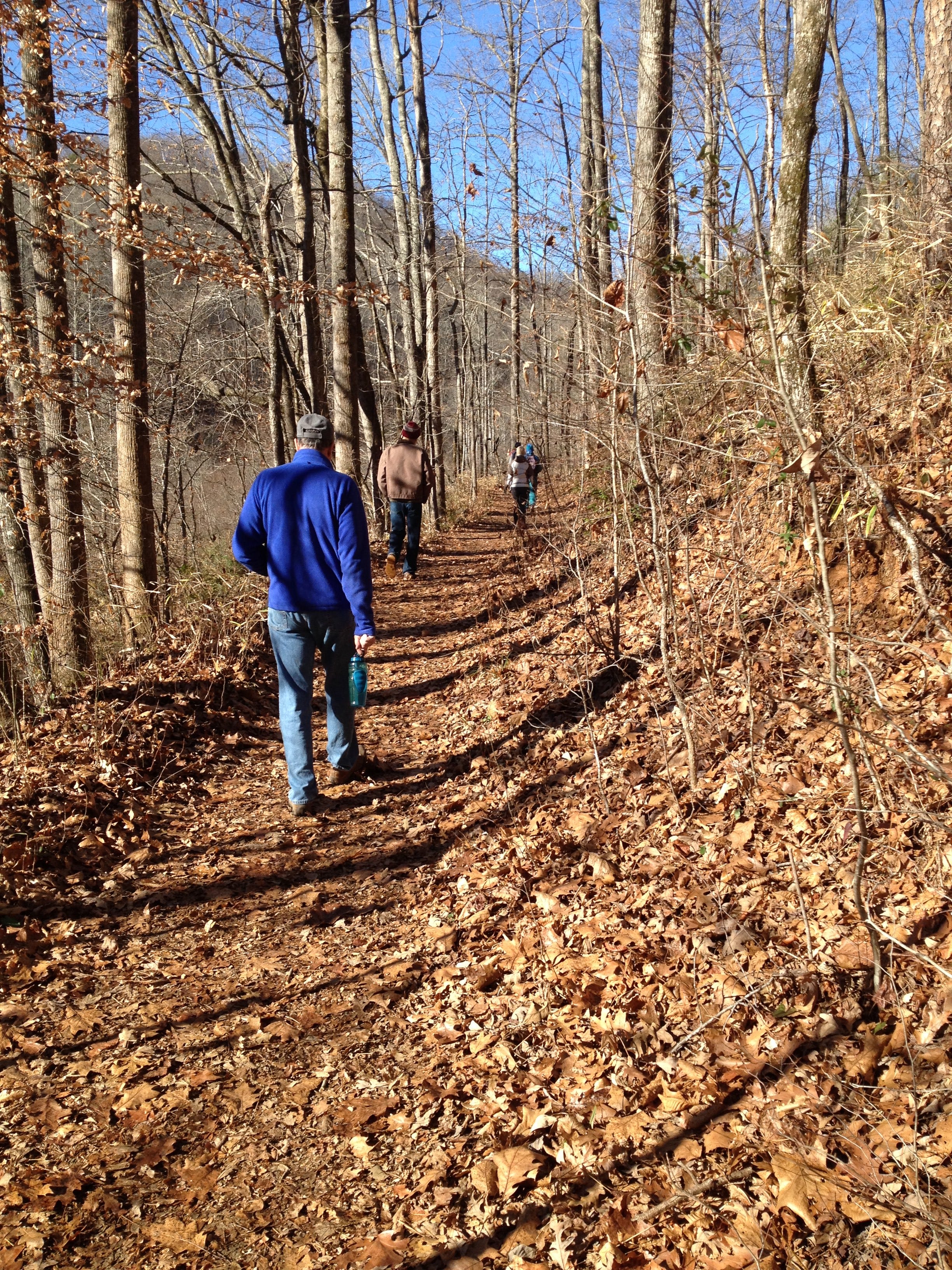
“Every day, I walk myself into a state of well-being and walk away from every illness. I have walked myself into my best thoughts, and I know of no thought so burdensome that one cannot walk away from it.” —— Soren Kierkegaard
I don’t mean to propose walking as an escape, a way to ignore what’s happening in the world—either our own personal world or the larger fate of our Earth. Quite the opposite.
What I mean is this: Walking can be a practice that helps us stay deeply engaged. A way to not be overcome by those “burdensome” thoughts Kierkegaard mentioned … and to walk into our “best thoughts.”
A nice long walk in the open air can help us process what is hard to bear in our lives. Each step unraveling a bit more of the problem, revealing clues as to what we should do. We move literally in the direction of what Buddhism calls “skillful action.”
My late brother Mark developed a practice in his sixties of walking several miles each day, always during the early morning hours when it was still dark outside. The local police got used to seeing him out there at 4 a.m., plodding along the sidewalks of his small town. Mark told me that he puzzled through a lot of things during those walks. And when he got cancer, my guess is that as he walked along each morning, he sorted through his options. He decided not to have any treatment, to let the cancer take its course. When the walks stopped, I knew his end was near.
Walking meditation—outside
I’ve written before about the benefits of walking in nature. I honestly can think of nothing else that is so grounding, so reassuring. When we walk outside in the natural world, according to Thich Nhat Hanh, our feet are “kissing” the Mother Earth. He calls it a miracle, and I think he’s right.
Normally I do my walking meditation with feet kissing the Earth. But here’s another place I walk: a tiny porch just off my meditation room. With its tin roof, it’s perfect for rainy or cold days when I don’t want to head into the woods.
Ten feet long, only about seven or eight steps from one end to the other.
I can walk there—back and forth, in silence—and peace comes to keep me company.

Here’s how to do it
I know by now you may be wondering about the particulars of walking meditation, if you’ve never practiced it.
Let me share a video I made several years ago, when Covid had shut down the world. Fear was swirling in the air, and no one knew what would happen next. (Sound familiar?) So I filmed a simple homespun video in our backyard where we lived then. I called it “Grounding Yourself in Uncertain Times.”
(A title that could also apply to today, right?)
The video offers several ways to engage with nature in unsettling times. If you’d like to fast-forward to the walking meditation part, that starts at about the 5:30 mark.
Dear friends … we are once again in rocky times. May this help you. May it provide a tool to ground your body and soothe your soul.
May it bring peace—and wisdom on how to act, how to respond to the world.
Thank you for this, Jeanne. These simple practices feel like they are saving my life lately.
Thanks for the beautiful, timely reminder. My whole body wants to go on walking meditation! I do find running to be a great way to clear my head but it’s admittedly very different. Love your video!